
Last updated September 25, 2026
Free written scope consultation - allowances, timeline, and change-order rules on paper before a single trade is scheduled
 Before
 After
After Before
 After
After Before
 After
AfterSeasonal Construction Care for Sunnyvale: Year-Round Homeowner’s Guide
Sunnyvale averages only 15 inches of rain per year, but 70 to 80 percent of it falls between November and March. That four-month concentration overwhelms gutters and foundation drainage that sat dry and uncleared all summer, and the damage shows up in April, not January. In this guide, we’ll walk through what Sunnyvale’s specific combination of dry summers, wet El Niño winters, and sharp diurnal temperature swings actually does to your home’s exterior wood, roofing, concrete, and drainage - and assign specific maintenance tasks to specific months so nothing gets skipped because the weather “seems mild.” For more detail, see our Complete Guide to Construction in Sunnyvale.
Quick Answer
Seasonal construction care in Sunnyvale means concentrating exterior maintenance in two windows: October before the rains arrive, and June through September when UV exposure peaks. Most Sunnyvale homeowners should budget $800-$2,400 annually for preventive maintenance across roofing, gutters, exterior wood, and concrete, with larger outlays every 3-5 years for sealers, coatings, and targeted repairs. See our Construction Cost Breakdown: The Sunnyvale Homeowner’s Reference for 2026 for detailed pricing. The key is matching each task to the month when conditions allow proper curing, inspection, or drainage testing.
Table of Contents
- Why Sunnyvale’s “Mild” Climate Deceives Homeowners
- October Pre-Rain Checklist: The Critical Four-Week Window
- Winter Monitoring: Reading Your Roof and Drainage After the First Rains
- Spring Recovery: What the Dry Season Reveals
- Summer UV and Heat: Concrete, Wood, and Air Quality Tasks
- Month-by-Month Maintenance Calendar and Budget
- Exterior Wood Maintenance Calendar for Sunnyvale’s UV Index
- Common Mistakes to Avoid
- When to Call a Professional
- Frequently Asked Questions
- The Bottom Line
 Before
 After
AfterWhy Sunnyvale’s “Mild” Climate Deceives Homeowners
The phrase “Mediterranean climate” gets thrown around loosely in Sunnyvale, and it masks three forces that actively degrade residential construction.
Concentrated winter rainfall. Those 15 annual inches arrive in roughly 50 hours of actual precipitation, often as intense atmospheric river events. A gutter system that handled drizzle in San Francisco will overflow here because the rate of rainfall per hour exceeds the downspout capacity. Foundation drainage designed for gentle soak patterns gets tested by sudden saturation.
Extreme diurnal temperature swings. Sunnyvale regularly sees 25°F to 35°F swings between daily high and low, especially in spring and fall. That thermal cycling expands and contracts sealants, roof membranes, and concrete at a rate that accelerates fatigue. A caulk joint that might last four years in a stable climate fails in two here.
High UV index with low humidity. Summer UV in Sunnyvale exceeds 9 on the index for weeks at a time, and relative humidity often drops below 30 percent. That combination pulls moisture from wood fibers faster than sealers can be replenished, and it cures water-borne coatings unevenly if application timing is wrong.
We’ve inspected homes in the Birdland and Lakewood neighborhoods where the exterior trim looked fine in May and was checked and splitting by October. The damage wasn’t from a single event. It was from 180 days of UV exposure without intervention.
October Pre-Rain Checklist: The Critical Four-Week Window
October is the only month in Sunnyvale when you can reliably complete exterior work before the rains, while temperatures still allow proper curing of sealants and coatings. Miss this window and you’re waiting until April.
Gutter and Downspout Clearance
- Remove all debris from gutters. Check the downspout outlets specifically - oak leaf litter from Sunnyvale’s mature street trees compacts into dense mats here.
- Flush each downspout with a hose. Water should exit freely at the discharge point. If flow backs up, disassemble the elbow and clear the obstruction.
- Verify discharge points direct water 6+ feet from foundation. In the Ponderosa and Cherry Chase areas with older lot grading, we’ve found downspouts dumping directly against stem walls.
- Test underground drains if present. Run water for 10 minutes and confirm it exits the daylight port. A clogged underground drain will back up into the foundation perimeter during the first heavy storm.
Foundation Vent Screens
Replace or repair vent screens before rodents seek winter shelter. Use 1/4-inch hardware cloth, not plastic screening. Check that vents still open and close properly - in Sunnyvale’s older stock, particularly near downtown, we’ve found painted-shut vents that trap moisture in crawl spaces all winter.
Caulk Inspection Around Window and Door Frames
UV exposure causes annual shrinkage in exterior caulk, especially on south and west exposures. In October:
- Probe each caulk joint with a putty knife. If the blade penetrates easily, the caulk has lost adhesion.
- Remove failed caulk back to sound material, clean with mineral spirits, and apply fresh polyurethane or high-quality acrylic latex.
- Pay special attention to head flashing joints above windows - this is where water enters wall cavities during driven rain.
Expected cost for DIY caulk renewal: $80-$180 in materials for an average Sunnyvale single-story home. Professional recaulking of all openings: $450-$900.
Winter Monitoring: Reading Your Roof and Drainage After the First Rains
The first significant rain, typically in mid-November, is your best diagnostic tool. Here’s how to read what your house is telling you.
Flat and Low-Slope Roofs: Ponding Tolerance
Sunnyvale has significant flat roof stock from the 1960s and 1970s, especially in the Fairbrae and San Miguel neighborhoods. Standing water is normal briefly; persistent ponding is not.
Within 48 hours of rain ending: Water should drain or evaporate from low points. If a pond remains after 72 hours of dry weather, you have either a blocked drain, a settled substrate, or a failed membrane.
Threshold for calling a roofer: Ponding that exceeds 1 inch in depth, covers more than 10 square feet, or persists beyond 72 hours. Below these thresholds, a drain cleaning ($180-$340) may resolve it. Above them, you’re looking at membrane evaluation and potential partial re-roofing.
We’ve documented this distinction on dozens of roofing in Sunnyvale inspections. Homeowners who call at the 72-hour mark catch drain blockages early. Those who wait until spring discover that freeze-thaw cycles (yes, Sunnyvale gets light frosts in January) have accelerated membrane degradation.
Foundation and Drainage Observation
Walk the perimeter during active rain. Look for:
- Water pooling against stem walls
- Overflow from window wells
- Sump pump cycling frequency (should increase during storms, not run continuously)
- New efflorescence on concrete or masonry - white powder indicates water moving through the material
Document with photos. The photo record you create in November becomes the baseline for comparing spring conditions.
Spring Recovery: What the Dry Season Reveals
By April, the rains have passed and damage patterns become visible. This is the season of revelation, not repair - your job in spring is to catalog what October’s preparation missed.
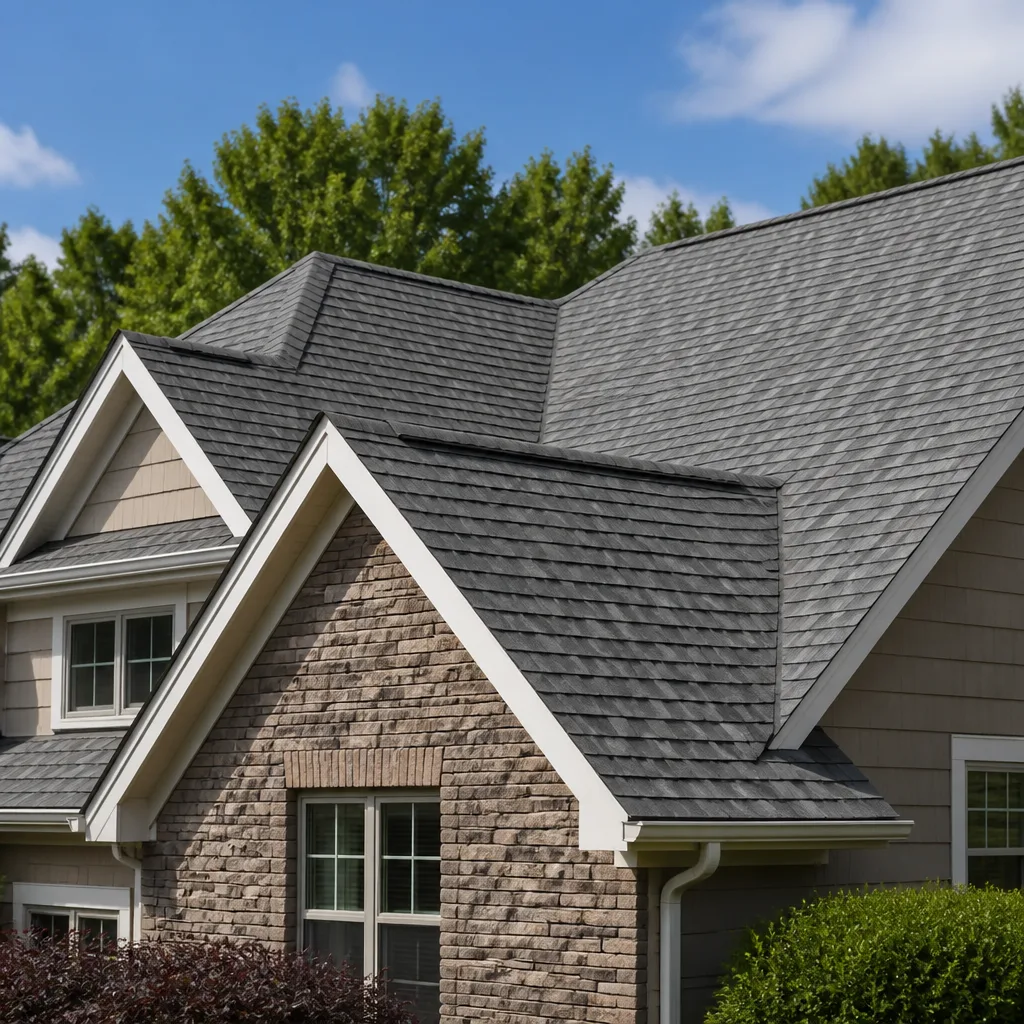
Roofing: Shingle and Membrane Inspection
Walk the roof perimeter with binoculars, or hire a professional for close inspection. In Sunnyvale’s climate, look specifically for:
- Shingle cupping on south exposures, caused by thermal cycling and UV degradation
- Cracked pipe boot flashing - the rubber gasket dries and splits in our low humidity
- Membrane blisters on flat roofs, which expand with each heat cycle
- Granule loss in gutters, indicating shingle surface erosion
Spring is also when we schedule the bulk of our roofing in Sunnyvale consultations. Homeowners who inspected in October and again in April have two data points; we can show them exactly how conditions changed and quote replacement with specific evidence.
Concrete and Hardscape: Crack Mapping
Measure and photograph any cracks in driveways, patios, or walkways. Sunnyvale’s clay-heavy soils in the eastern neighborhoods (near Homestead High School and beyond) expand when wet and contract when dry. A crack that was 1/8 inch in October and is now 3/16 inch is actively moving. Mark it with a dated pencil line and measure again in June.
Cracks under 1/4 inch that are not displacing vertically can be sealed with polyurethane joint filler. Wider cracks, or any with vertical offset, need structural evaluation.
Exterior Wood: Post-Winter Condition Assessment
Check horizontal surfaces especially: deck boards, rail caps, window sills. Press firmly with a screwdriver tip. Soft wood that accepts the tool easily indicates moisture infiltration and early rot. In Sunnyvale, we’ve found that south-facing deck surfaces can fail in as little as 7 years without maintenance, while shaded north exposures last 15-plus.
Summer UV and Heat: Concrete, Wood, and Air Quality Tasks
June through September in Sunnyvale brings sustained 90°F-plus days, UV index above 9, and increasingly, wildfire smoke particulate from regional fires. Each factor drives specific maintenance.
Deck Board Gap Checks
Wood expands when humid and contracts when dry. In Sunnyvale’s low-humidity summer, deck boards shrink and gaps widen. Gaps exceeding 3/8 inch create trip hazards and allow debris accumulation that traps moisture come winter.
Remediation: Tighten fasteners, replace individual boards if gaps are inconsistent, or plan full redecking if the framing is sound but the surface is uniformly degraded. For new or renewed decks, we specify kiln-dried cedar or composite materials from brands like Bufftech that resist dimensional change.
Concrete Crack Monitoring
The cracks you mapped in spring? Measure them again in August at peak dryness. Expansion of more than 1/8 inch since spring indicates active soil movement. This is the data a structural engineer or foundation specialist needs to assess whether drainage correction, soil stabilization, or piering is appropriate.
HVAC Filter Intervals Driven by Wildfire Smoke
Sunnyvale’s air quality events since 2020 have changed filter maintenance. Standard 90-day filter replacement assumes normal particulate loads. During active wildfire smoke, filters load in 2-3 weeks. We recommend:
- MERV 13 filters during smoke events (if your system can handle the static pressure)
- Visual inspection every 2 weeks when AQI exceeds 100
- Replacement when the filter media is visibly gray, not waiting for the calendar date
Extended smoke seasons also affect exterior coatings. If you’re planning to stain or seal exterior wood, check the AQI forecast. Solvent-borne products cure faster but release more VOCs; water-borne products are lower-odor but cure inconsistently when particulate-laden air slows evaporation.
Month-by-Month Maintenance Calendar and Budget
This calendar assigns tasks to the month when conditions in Sunnyvale allow proper execution. Costs are ranges based on our 2023-2024 project data for single-family homes in the 94086, 94087, and 94089 ZIP codes.
| Month | Task | Est. Time | DIY Cost | Pro Cost |
|---|---|---|---|---|
| January | Inspect attic for leaks after first major storms; check insulation displacement | 2-3 hrs | $0 | $180-$280 inspection |
| February | Monitor foundation drainage during active rain; document pooling | 1 hr | $0 | $0 (observation only) |
| March | Schedule professional roof inspection; gutter damage from winter load | 1 hr (scheduling) | $0 | $220-$350 |
| April | Spring damage catalog: photograph cracks, wood condition, roof state | 3-4 hrs | $0 | $180-$280 inspection |
| May | Pressure wash exterior surfaces; repair caulk as needed before heat | 4-6 hrs | $80-$150 rental | $450-$750 |
| June | Apply deck sealer/stain; inspect and reset loose pavers | 6-8 hrs | $200-$400 materials | $1,200-$2,400 |
| July | Concrete crack sealing; expansion joint maintenance | 3-4 hrs | $60-$120 | $550-$950 |
| August | HVAC filter replacement; exterior paint touch-up on south exposure | 2-3 hrs | $40-$80 | $350-$650 |
| September | Final deck inspection before rains; plan October work | 1 hr | $0 | $0 |
| October | Gutter/downspout clearance; foundation vent screens; full recaulk | 8-12 hrs | $150-$300 | $900-$1,800 |
| November | First-rain roof and drainage observation; document baseline | 2 hrs | $0 | $0 |
| December | Interior humidity monitoring; check for condensation on windows | 30 min | $0 | $0 |
Annual total if DIY: $530-$1,050 in materials and equipment rental.
Annual total if professional: $2,800-$5,600 for full service, or $800-$2,400 for targeted professional work with homeowner handling observation tasks.
Major cyclical outlays (every 3-5 years): exterior repaint ($4,500-$9,000), roof maintenance coating on flat roofs ($2,200-$4,500), full deck resurfacing ($3,500-$7,500).
Exterior Wood Maintenance Calendar for Sunnyvale’s UV Index
Sunnyvale’s UV index peaks in June and July, but the cumulative exposure from April through October is what destroys exterior wood. The maintenance calendar depends on product chemistry and application timing.
When to Apply: The Temperature Window
Wood sealers and stains need surface temperatures between 50°F and 90°F, with 24 hours of dry weather after application. In Sunnyvale, this means:
- Optimal: Late April to mid-May, and mid-September to mid-October
- Acceptable: June mornings before surface temperatures climb
- Avoid: July and August afternoons - surfaces exceed 100°F and products skin before penetrating
Solvent-Borne vs. Water-Borne: Sunnyvale-Specific Performance
Solvent-borne (oil-based) products: Penetrate deeper, last longer (2-3 years on horizontal surfaces), but cure slowly in Sunnyvale’s low humidity and release high VOCs. Best for dense hardwoods and high-traffic decks. We’ve had good results with penetrating oils on Belgard paver-adjacent redwood structures where water-borne products bead rather than soak.
Water-borne (acrylic/latex) products: Clean up with water, lower VOC, but cure by evaporation - which happens unevenly when humidity drops below 30 percent. Can appear cured while still soft underneath, leading to premature wear. Best for vertical surfaces (siding, fences) and applications where quick return to service matters.
Hybrid recommendations for Sunnyvale: On south-facing horizontal surfaces, we specify solvent-borne penetrating stains with iron oxide pigments for UV absorption. On north-facing vertical siding, high-quality water-borne products with adequate dry time perform well. For ActiveYards aluminum fencing paired with wood posts, we isolate the wood with flashing and treat it as a separate maintenance item from the metal.
Application Protocol
- Clean with oxygenated bleach, not pressure-washing alone, which raises wood grain.
- Let dry 48 hours minimum - in Sunnyvale’s dry climate, this is often sufficient, but check with a moisture meter (below 15 percent).
- Apply thin coats, not heavy saturation. Two thin coats penetrate better than one thick one.
- Back-brush after spraying to work product into end grain, where water enters most readily.
- Avoid application within 48 hours of forecast rain or when AQI exceeds 150.
Common Mistakes to Avoid
- Skipping October because “it never rains hard here.” Sunnyvale’s rain is concentrated, not gentle. A gutter that handles drizzle will fail in a December atmospheric river. The cleanup cost from one overflow event exceeds five years of preventive maintenance.
- Pressure-washing decks at too high pressure. We’ve replaced deck boards in the Serra neighborhood where homeowners used 3,000+ PSI, stripping the soft grain and creating channels that trap water. Use 500-1,200 PSI with a fan tip, or hire a professional who knows wood species.
- Applying sealer in July afternoon heat. The product skins in minutes, trapping solvent against the surface. It looks coated but peels within one season. Morning application in moderate months is the only reliable approach.
- Ignoring flat roofs until they leak. By the time water shows inside, the substrate is saturated and insulation compromised. The 72-hour ponding rule exists because early intervention costs hundreds, not thousands.
- Using interior caulk for exterior applications. Siliconized acrylic latex is the minimum for Sunnyvale’s UV exposure; pure silicone or specialized polyurethane are better. Interior caulk fails in 6-12 months of sun exposure.
- Neglecting to document conditions seasonally. Without dated photos, you cannot prove to insurers or buyers that a crack is new or growing. The photo record is evidence, not nostalgia.
- Assuming “no foundation issues” because the house is on slab. Sunnyvale’s slab-on-grade construction in postwar neighborhoods still moves with soil expansion. Cracks in slab perimeter, sticking doors, and separated baseboards are movement indicators even without a crawl space.
When to Call a Professional
Some conditions exceed homeowner capability or involve safety risks that warrant trained evaluation. Call a professional when:
- Ponding on flat roofs persists beyond 72 hours or exceeds 1 inch depth
- Foundation cracks show vertical displacement or grow more than 1/8 inch in a single season
- Exterior wood is soft to probe and affects structural elements (posts, beams, ledger boards)
- Roof work requires ladder access above single-story height or near electrical service
- Concrete settlement creates trip hazards or affects garage slab drainage toward the house
Rowan Construction Group Sunnyvale offers free estimates in Sunnyvale. We’ll inspect, photograph, and deliver a written price before any work starts - that’s Clause 1 of The Haven Standard, and it’s been our practice since 2007. Call (650) 405-3637 to schedule.
Frequently Asked Questions
Most Sunnyvale homeowners spend $800-$2,400 annually on professional preventive maintenance, or $530-$1,050 in materials if handling tasks themselves. Major cyclical work like exterior painting or deck resurfacing adds $3,500-$9,000 every 3-5 years. Call (650) 405-3637 for a line-item estimate on your specific home - estimates are free.
No. Under The Haven Standard, the written price we deliver before work begins is the price you pay unless you request a change and sign a change order. Since 2007, our projects have finished within a few percent of the agreed number because no work proceeds on a change until the paperwork is signed.
Pure maintenance - gutter cleaning, caulking, filter replacement - does not require permits in Sunnyvale. Roof repairs exceeding 100 square feet, structural repairs, or changes to drainage discharge points may trigger permit requirements under Santa Clara County code. For more on this, read Construction Permits, Codes & Inspections in CA: What You Need to Know. We pull all permits when required and schedule inspections as part of our project management.
If water remains 72 hours after rain ends, or the pond exceeds 1 inch deep or 10 square feet, call a roofer for membrane evaluation. Faster-draining ponds or isolated slow spots often need only drain clearing at $180-$340. We document this distinction on every roofing in Sunnyvale inspection.
Solvent-borne penetrating stains with iron oxide pigments last 2-3 years on horizontal surfaces in Sunnyvale’s high-UV, low-humidity conditions. Water-borne products typically last 1-2 years on decks but perform adequately on vertical siding. The key factor is application timing - never apply in peak summer heat, regardless of product quality.
Smoke particulate loads HVAC filters in 2-3 weeks during active events, versus 90 days normally. It also slows curing of water-borne exterior coatings and increases VOC retention from solvent-borne products. Check AQI before scheduling exterior coating work, and inspect filters visually every two weeks when AQI exceeds 100.
The Bottom Line
Sunnyvale’s climate rewards the homeowner who respects its specific patterns: the concentrated winter rains, the sharp temperature swings, the intense summer UV. The maintenance calendar in this guide spreads tasks across the year so no single season overwhelms, and it assigns each task to the month when conditions allow proper execution. The cost of prevention - $800-$2,400 annually - is a fraction of the cost of repairing water damage, replacing rotted structural members, or resurfacing a failed flat roof. Document what you find, measure what changes, and call for professional evaluation when conditions exceed safe homeowner intervention.
Written by Grant Rowan, Owner at Rowan Construction Group Sunnyvale, serving Sunnyvale since 2007.