
Free written scope consultation - allowances, timeline, and change-order rules on paper before a single trade is scheduled
 Before
 After
After Before
 After
After Before
 After
AfterHow Much Does Metal Roof Installation Cost in Sunnyvale?
Metal roof installation in Sunnyvale, CA typically costs between $15,000 and $40,000 for a standard single-family home, with most projects landing between $20,000 and $32,000 depending on roof size, panel profile, and substrate condition. That wide range reflects real differences in the Sunnyvale market: a modest ranch-style home in Lakewood Village with a simple hip roof costs considerably less than a two-story craftsman in Heritage District with multiple valleys, dormers, and existing tile that needs removal first. At Rowan Construction Group, every quote is a flat written price delivered before any crew arrives – because a number you can screenshot is more useful than a ballpark you have to call to get.
Metal Roof Installation Cost Breakdown (2026)
Metal roofing in Sunnyvale breaks into several distinct cost layers. The table below reflects current material and labor pricing in the South Bay market as of 2026 – not national averages pulled from a trade magazine. Bay Area labor rates, California disposal fees, and local permit requirements all push these numbers above what you’ll see on national cost estimator sites.
| Cost Component | Low End | High End | Notes |
|---|---|---|---|
| Standing seam metal panels (steel) | $4.50/sq ft | $8.00/sq ft | Galvalume steel, 24-26 gauge; most common in Sunnyvale |
| Standing seam metal panels (aluminum) | $7.00/sq ft | $12.00/sq ft | Better corrosion resistance near the Bay; lighter on older framing |
| Metal shingle panels | $5.50/sq ft | $10.00/sq ft | Mimics tile or shake; common in Sunnyvale neighborhoods with HOA appearance rules |
| Underlayment (synthetic) | $0.60/sq ft | $1.20/sq ft | Required under California Title 24; high-temp rated for metal applications |
| Insulation / thermal barrier | $1.00/sq ft | $2.50/sq ft | Often added to address condensation on metal in coastal air |
| Old roof removal (1 layer) | $1.00/sq ft | $2.00/sq ft | Santa Clara County disposal fees included |
| Old roof removal (tile or 2+ layers) | $2.00/sq ft | $4.50/sq ft | Tile adds significant weight to haul; Sunnyvale has many 1970s-80s tile roofs |
| Decking repair / sheathing replacement | $3.00/sq ft | $6.50/sq ft | Priced per square foot of damaged area; moisture intrusion common near gutters |
| Flashing, ridge cap, trim detail | $800 | $3,500 | Complexity-driven; valleys and skylights add cost |
| Sunnyvale building permit | $400 | $1,200 | Required for full re-roof; Sunnyvale Building Division standard range |
| Labor (installation) | $4.00/sq ft | $7.00/sq ft | Bay Area labor rates; standing seam labor runs higher than exposed-fastener systems |
| Total installed cost (typical Sunnyvale home) | $15,000 | $40,000 | 1,500-2,800 sq ft roof footprint; includes permit, tear-off, install |
A few things push projects toward the upper end in Sunnyvale specifically. The city’s Building Division requires a permit for any full re-roof, and inspections add a day or two to the timeline – something any honest written quote will account for. Santa Clara County also imposes landfill surcharges on roofing debris that are meaningfully higher than Central Valley rates. And Bay Area labor costs what Bay Area labor costs: a journeyman roofer here earns more than in Sacramento or Fresno, and that gap is already priced into the numbers above rather than buried in a contingency line.
The material choice is where most of the spread lives. A 2,000-square-foot roof in Remington with 26-gauge Galvalume standing seam panels and a single layer of asphalt shingle removal might come in at $22,000 to $26,000 all-in. The same footprint in Cherry Chase with 1970s concrete tile removal, aluminum panels for corrosion resistance, a thermal barrier for condensation control, and significant sheathing repair could reach $36,000 or more. Those aren’t edge cases – they’re both common Sunnyvale scenarios.
What Affects Metal Roof Installation Pricing in Sunnyvale
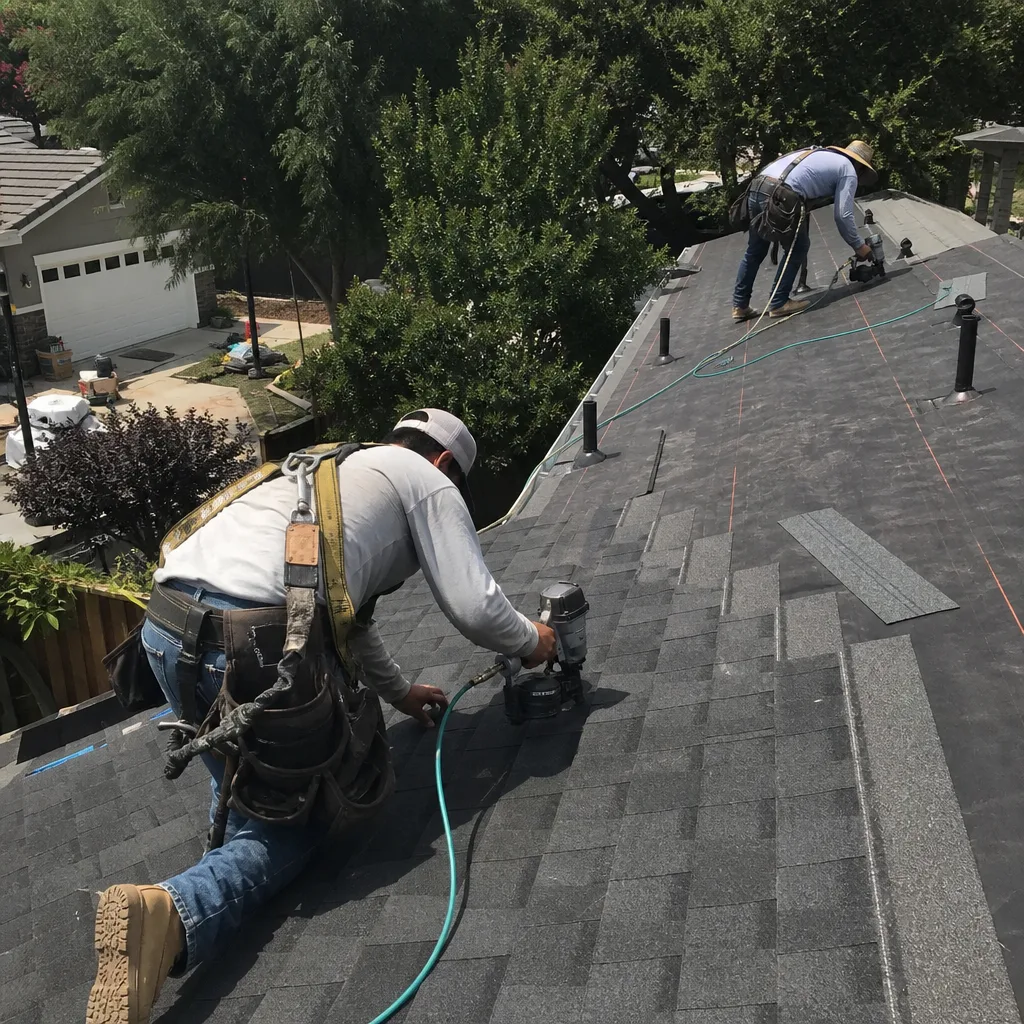
- Roof size and pitch: Pricing is calculated per square foot of actual roof surface, not floor area – a steep-pitch roof covers significantly more surface than the house footprint suggests. Many Sunnyvale homes built in the 1950s and 1960s have lower-pitch roofs that are easier to work, while newer construction and custom homes in neighborhoods like Ponderosa Park often have complex multi-plane designs that add labor time at every seam and valley.
- Panel profile and metal type: Standing seam is the most labor-intensive profile to install because each panel must be seamed and locked mechanically – but it’s also the most durable and the profile most likely to qualify for energy-efficiency credits under California’s Title 24. Exposed-fastener corrugated panels cost less to install but aren’t appropriate for low-slope roofs and tend to need re-fastening within 10-15 years. Metal shingles split the difference and are a common choice where HOA guidelines in areas like The Meadows require a tile or shake appearance.
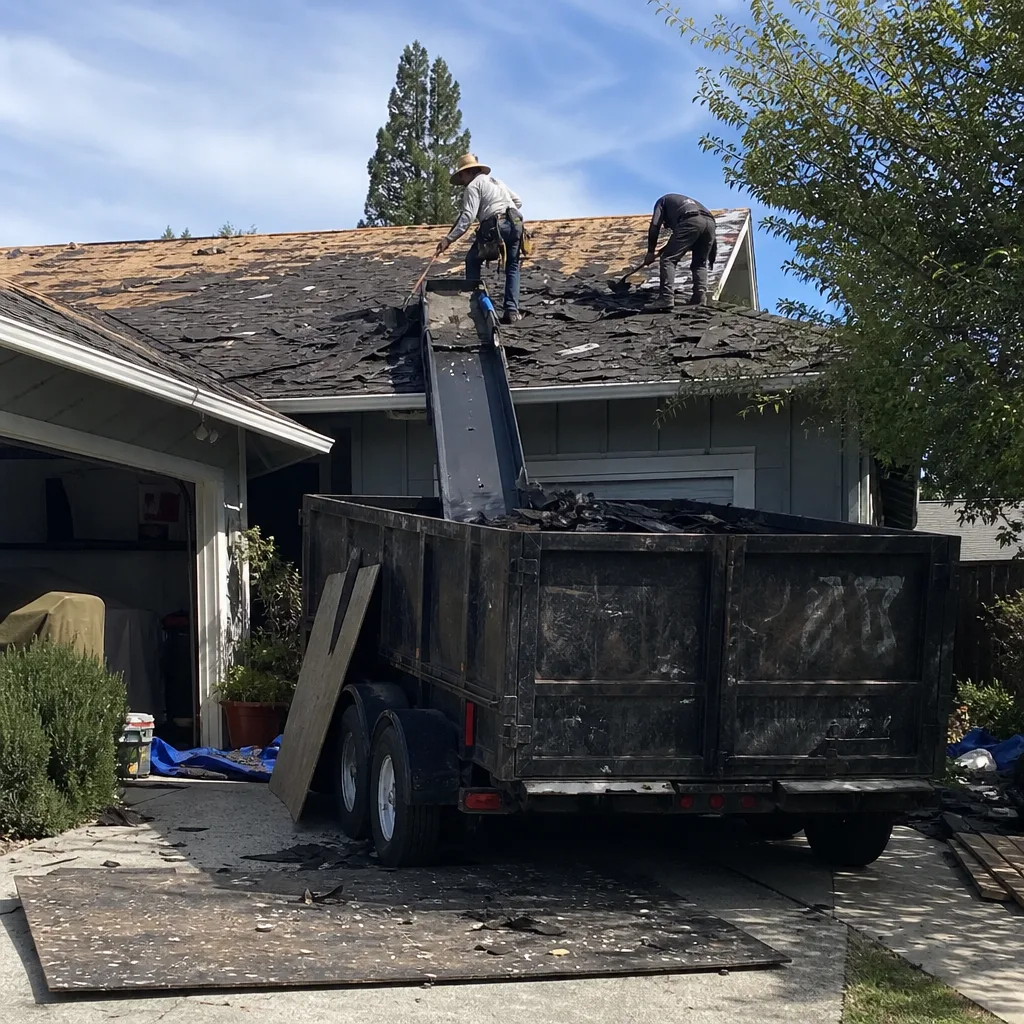
- Existing roof removal: In Sunnyvale, a large share of re-roofing projects start with a concrete or clay tile removal. Tile is heavy, brittle, and generates significant debris volume – a 2,000-square-foot concrete tile roof can weigh 20 tons before you’ve pulled the first panel. That removal alone can add $4,000 to $9,000 to a project budget compared to a single-layer asphalt tear-off.
- Substrate condition: Metal roofing is unforgiving of a soft deck. Because the panels span the full length of a roof plane, any rot, delamination, or unevenness in the sheathing telegraphs through the finished surface. Rowan crews document the decking condition photographically during tear-off so the homeowner sees exactly what was found and what was replaced – that documentation is included on every visit, not sold as an add-on. Homes near Sunnyvale’s older neighborhoods around Murphy Avenue often show moisture damage at the eaves from decades of inadequate attic ventilation.
- Complexity: valleys, penetrations, and skylights: Each skylight, vent stack, or chimney penetration requires custom flashing fabricated on-site. A simple hip roof with two planes and a ridge is straightforward. A roof with six planes, two skylights, a solar pipe penetration, and a masonry chimney – common in Sunnyvale’s larger homes in Lakewood and Raynor Park – can double the flashing labor relative to the panel installation itself.
- Permit and inspection requirements: Sunnyvale’s Building Division requires a permit for complete re-roof work, and the permit fee scales with project valuation. A mid-range metal roof project typically generates a permit fee of $600 to $900, plus a day for inspection scheduling. Any contractor who proposes skipping the permit is not doing you a favor – unpermitted roofing work can complicate a future sale and void manufacturer warranties on GAF and Owens Corning metal systems that require documented installation records.
 Before
 After
AfterMetal Roof Materials: Which Profile Makes Sense in Sunnyvale?
The Sunnyvale climate shapes this decision more than most homeowners expect. The Bay Area’s marine influence means the air carries more moisture and salt particulate than inland California – not as aggressive as a coastal property in Santa Cruz, but enough to matter over a 40-year roof lifespan. Here’s how the main metal roofing options stack up for this market.
Standing Seam Steel
The most common metal roofing system Rowan installs in Sunnyvale. Galvalume steel – a steel sheet with an aluminum-zinc alloy coating – offers strong corrosion resistance at a lower material cost than aluminum. We source Galvalume panels from vetted suppliers in the GAF and Owens Corning networks, both of which maintain documented installation standards and manufacturer warranties. On a typical Sunnyvale home, standing seam steel lands in the $22,000 to $32,000 range installed, including permit and tear-off. The concealed-fastener design means no exposed screw holes to become leak points over time, which is the practical reason most metal roofing professionals prefer it for residential applications.
Aluminum Standing Seam
Aluminum costs more per panel but doesn’t rust, full stop. For Sunnyvale homes that are closer to the Bay shoreline – properties in the eastern part of the city near the sloughs – or homes where the roof will be harder to access for periodic inspections, aluminum is worth the premium. Expect to add $3,000 to $6,000 to a comparable steel installation. Aluminum is also about 30% lighter than steel at the same gauge, which occasionally matters on older framing where a structural engineer has flagged load concerns.
Metal Shingles
Metal shingles are stamped panels designed to look like traditional tile, slate, or cedar shake from street level. They’re a common solution in Sunnyvale neighborhoods where HOA design guidelines reference the appearance of the original roofing material. They install faster than standing seam (lower labor cost), but use exposed fasteners and have shorter warranty periods than concealed-seam systems. Budget $18,000 to $28,000 for a typical installation. If your primary concern is appearance within an HOA context and you’re comfortable with a 30-year rather than 50-year system, metal shingles are a reasonable choice.
Corrugated / Exposed-Fastener Panels
These are the least expensive metal option and have legitimate uses – detached garages, workshops, agricultural structures, and certain commercial applications. On a primary residence in Sunnyvale, they’re rarely the right call. The exposed fasteners develop micro-leaks as the screws work through repeated thermal expansion cycles, and the profile requires a minimum roof pitch that many Sunnyvale homes don’t have. We include them in written quotes when a homeowner specifically requests them, but we’ll explain the tradeoff clearly before the price is signed.
How to Save on Metal Roof Installation in Sunnyvale
Metal roofing costs what it costs – the material price, the Bay Area labor rate, and the permit fee aren’t negotiable line by line. But there are real ways to control the final number, and a few common mistakes that inflate it unnecessarily.
- Get a second opinion on the scope, not just the price: The biggest variable isn’t the panel cost, it’s what’s included in the scope. One contractor quotes a simple tear-off and install; another quotes the same project with a thermal barrier, all-new sheathing, and custom valley flashing. Both quotes look different because they’re for different scopes. Rowan offers a free written review of any existing estimate, line by line, so you can see exactly what’s priced and what isn’t. Call (650) 405-3637 to set that up – no obligation, no sales pressure.
- Address substrate issues now, not later: If the crew finds rot or soft sheathing during tear-off on a project where the scope only covered minimal decking repair, you’ll face a change order mid-job. Rowan’s written quotes account for the likely substrate condition based on what we see during the estimate – and if we find additional damage during tear-off, we document it photographically before touching it and price the repair in a signed change order before any additional work starts. No mid-project surprises means no inflated final bill.
- Avoid removing and replacing skylights unless necessary: Skylights are significant add-ons. If an existing skylight is structurally sound and properly flashed, a good installer can work around it. If it’s leaking, a re-roof is a smart time to replace it – but don’t let a contractor default to full replacement when re-flashing would do.
- Consider the total cost over time, not just the installation cost: A standing seam metal roof installed correctly on a Sunnyvale home should last 40-60 years with minimal maintenance. Compared to a standard asphalt shingle roof – typically $8,000 to $20,000 to install but likely needing replacement in 20-25 years in the Bay Area’s UV and marine environment – the lifecycle math often favors metal. That’s not a sales point; it’s arithmetic worth doing on paper before you decide.
- Check California energy rebate programs: Cool-roof-rated metal panels (ENERGY STAR certified with a solar reflectance index above a certain threshold) can qualify for utility rebates through PG&E’s programs and may affect your Title 24 compliance calculation. Ask your contractor to specify the SRI rating of the panel being quoted; it’s a number that should be in the written scope.
- Plan around permit timing: Sunnyvale’s Building Division processes permit applications on a standard timeline, but submitting before the busy spring re-roofing season means faster approvals and more scheduling flexibility. A project scoped in February or March often finishes faster than the same project started in May.
What the Installation Process Looks Like – Step by Step
For homeowners who haven’t been through a metal re-roof before, knowing what to expect reduces the friction of a week-long project on your home.
Day 1: Permit and Pre-Installation
Rowan files the Sunnyvale building permit before any work starts. Once approved, the crew arrives in uniforms, background-checked, with the day’s materials staged on the driveway. The first task is protecting the property: tarps over landscaping, plywood over window wells, and vehicle relocation coordination if needed. Every crew member carries documentation of the project scope so the homeowner knows exactly who is on their roof and why.
Days 1-2: Tear-Off and Decking Inspection
The existing roofing is removed down to the sheathing. This is the stage where substrate condition becomes visible – and where a documented photo record earns its value. Rowan photographs the sheathing in sections before any repairs are made, so the homeowner has a before-and-after record of exactly what was found and what was done. Any sheathing that’s soft, delaminated, or water-damaged is flagged, priced in a signed change order, and replaced before underlayment goes down. No exception to the signed change order process – that’s not a policy, it’s the discipline that has kept Rowan’s projects within a few percent of the agreed price across more than 4,000 jobs since 2007.
Day 2-3: Underlayment and Thermal Barrier
High-temperature synthetic underlayment goes down across the full deck. For standing seam installations, a thermal barrier or foam tape is installed at the panel clips to break the conductive path between the metal panel and the wood deck – relevant in Sunnyvale’s cooler morning temperatures, which cause condensation on uninsulated metal. This step is often skipped by contractors trying to sharpen their price; it’s standard in Rowan’s written scope.
Days 3-5: Panel Installation, Flashing, and Trim
Panels are cut and installed from eave to ridge. Standing seam panels are mechanically seamed at each joint, which requires specialized tooling and accounts for a meaningful portion of the labor premium versus exposed-fastener systems. Custom flashing is fabricated and installed at all valleys, penetrations, and transitions. The ridge cap is the last major installation step before trim and sealant work.
Final Day: Inspection and Closeout
The Sunnyvale Building Division inspector reviews the work. Once the inspection is signed off, Rowan does a full site cleanup – including magnetic nail sweeps of the driveway and yard – and delivers the project closeout package: the signed permit, the manufacturer warranty documentation, and the photo record of the completed installation. The 365-Day Done Right Promise starts the day the permit closes.
FAQs – Metal Roof Installation Cost in Sunnyvale
How much does metal roof installation cost in Sunnyvale, CA?
Metal roof installation in Sunnyvale costs between $15,000 and $40,000 for a typical single-family home, with most projects in the $20,000 to $32,000 range. The low end reflects a modest home with a simple roof profile, minimal tear-off complexity, and steel standing seam panels. The high end applies to larger homes with complex roof geometry, concrete tile removal, aluminum panels, and significant decking repair. Bay Area labor rates and Santa Clara County permit and disposal fees account for the gap between these numbers and national cost estimates. Call (650) 405-3637 for a flat written quote specific to your home’s footprint and condition – estimates are free.
Is metal roofing worth the cost compared to asphalt shingles in Sunnyvale?
A standard asphalt shingle re-roof in Sunnyvale runs $8,000 to $20,000 and typically carries a useful lifespan of 20 to 25 years in the Bay Area’s UV and coastal marine environment. A standing seam metal roof installed correctly on the same home should last 40 to 60 years with minimal maintenance and no re-roofing cycle in between. Over a 50-year period, the total cost of two or three asphalt shingle roofs often exceeds the cost of a single metal installation – plus you avoid two additional rounds of tear-off labor and disposal fees at whatever those rates are in 2040 and 2060. The calculus depends on how long you plan to stay in the home and whether the higher upfront cost fits your budget today. That’s a decision only you can make, but the numbers are worth running on paper.
How long does metal roof installation take in Sunnyvale?
Most metal roof installations on Sunnyvale single-family homes take four to seven working days from tear-off to inspection sign-off. That includes permit processing time (typically two to five business days before work starts, depending on the Sunnyvale Building Division’s current queue), the tear-off and decking inspection, underlayment and panel installation, flashing and trim work, and the final building inspection. Larger homes or projects with significant decking repairs can run seven to ten days. Your written quote will include a project schedule so you know what to expect before the crew arrives.
Do I need a permit for metal roof installation in Sunnyvale?
Yes. A permit is required by the Sunnyvale Building Division for any complete re-roof, including metal roof installations. The permit fee for a typical residential metal roof project runs $400 to $1,200 depending on the project valuation. The inspection ensures the installation meets California Title 24 requirements and the manufacturer’s documented installation standards – which matters because both GAF and Owens Corning metal roofing warranties require a permitted installation record to be valid. Any contractor proposing to skip the permit is creating a future problem for you, not a present savings. Rowan files the permit as part of every re-roof scope, and the fee is included in the written quote, not added later.
What’s the difference between standing seam and metal shingles, and which should I choose?
Standing seam panels are full-length panels that run from eave to ridge with concealed mechanical seams – no exposed fasteners, fully waterproof at the joint, and the most durable residential metal roofing system available. They cost more to install ($22,000 to $35,000 for a typical Sunnyvale home) and carry longer warranties. Metal shingles are stamped panels designed to look like tile, slate, or shake; they use exposed fasteners, install faster, and typically cost $18,000 to $28,000. If your primary concern is maximum longevity and you don’t have HOA appearance constraints, standing seam is the more defensible choice. If your HOA requires an appearance consistent with traditional roofing materials, or if budget is the binding constraint, metal shingles are a reasonable middle path. Rowan will put both options in writing at your free estimate so you can compare them on paper.
Can metal roofing be installed over my existing shingles in Sunnyvale?
In some cases, yes – California code permits installation over one existing layer of asphalt shingles if the deck is sound, the pitch is adequate, and the added weight is within the structural allowance. In practice, Rowan recommends full tear-off in most Sunnyvale projects for two reasons. First, re-roofing over an existing layer traps moisture between the layers and makes it impossible to inspect the decking condition, which is where metal roofing problems typically originate. Second, any existing sheathing damage is hidden and will eventually cause a failure in the new roof. The cost of tear-off ($1.00 to $2.00 per square foot for a single asphalt layer) is modest relative to the risk of a compromised installation. Your written estimate will price both options if you want to compare them directly.
Rowan Construction Group – Metal Roofing in Sunnyvale
Grant Rowan founded Rowan Construction Group in 2007 with a single operational rule: the price is written before anyone picks up a tool. Seventeen years and more than 4,000 projects later, that rule is still Clause 1 of the Haven Standard. For Metal Roof Installation in Sunnyvale, that means a flat written price with a written scope, a permit filing included, and a 365-Day Done Right Promise that covers the work after the crew leaves – not a handshake, a documented guarantee with terms on a page you can read.
Every Rowan crew member is background-checked and uniformed. Every visit includes a documented photo record – the condition we found, what we did, what was replaced – delivered to the homeowner as a standard closeout document, not an upgrade. And if you’ve already received a written estimate from another contractor, bring it: Rowan offers a free second opinion on any written estimate, reviewed line by line, at no charge.
For homeowners researching metal roofing options across Sunnyvale’s neighborhoods – from Lakewood Village to Cherry Chase to Murphy Historic District – the starting point is a written number, not a range you have to call to narrow down. Our home page has the full scope of what Rowan covers. When you’re ready for a flat written quote on your specific home, call (650) 405-3637. The estimate is free, the price is in writing, and no work starts until the scope is signed.
Written by Grant Rowan, Owner at Rowan Construction Group, serving Sunnyvale since 2007.
Pricing reflects the Sunnyvale market as of 2026. Rowan Construction Group Sunnyvale offers free estimates – call (650) 405-3637.
What Our Customers Say
"Driveway replaced properly with a base that will actually last. They explained why the cheaper quote was cheaper."
- Reggie O."Good communication throughout. Weekly written update meant I never had to chase them."
- Nadine G."Fence and retaining wall along a sloped boundary. They photographed the footing depth at each post, which mattered when the county inspector came."
- Iona F.