
Last updated September 25, 2026
Free written scope consultation - allowances, timeline, and change-order rules on paper before a single trade is scheduled
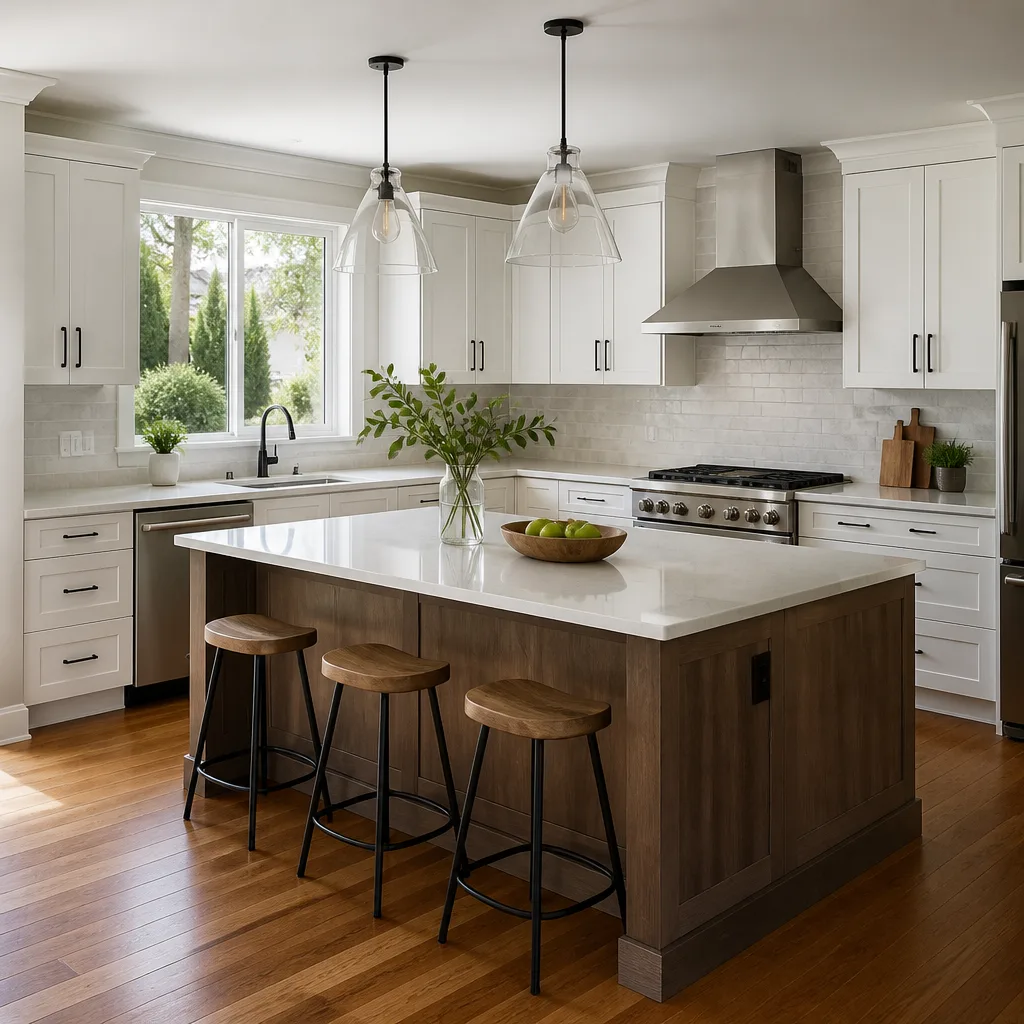
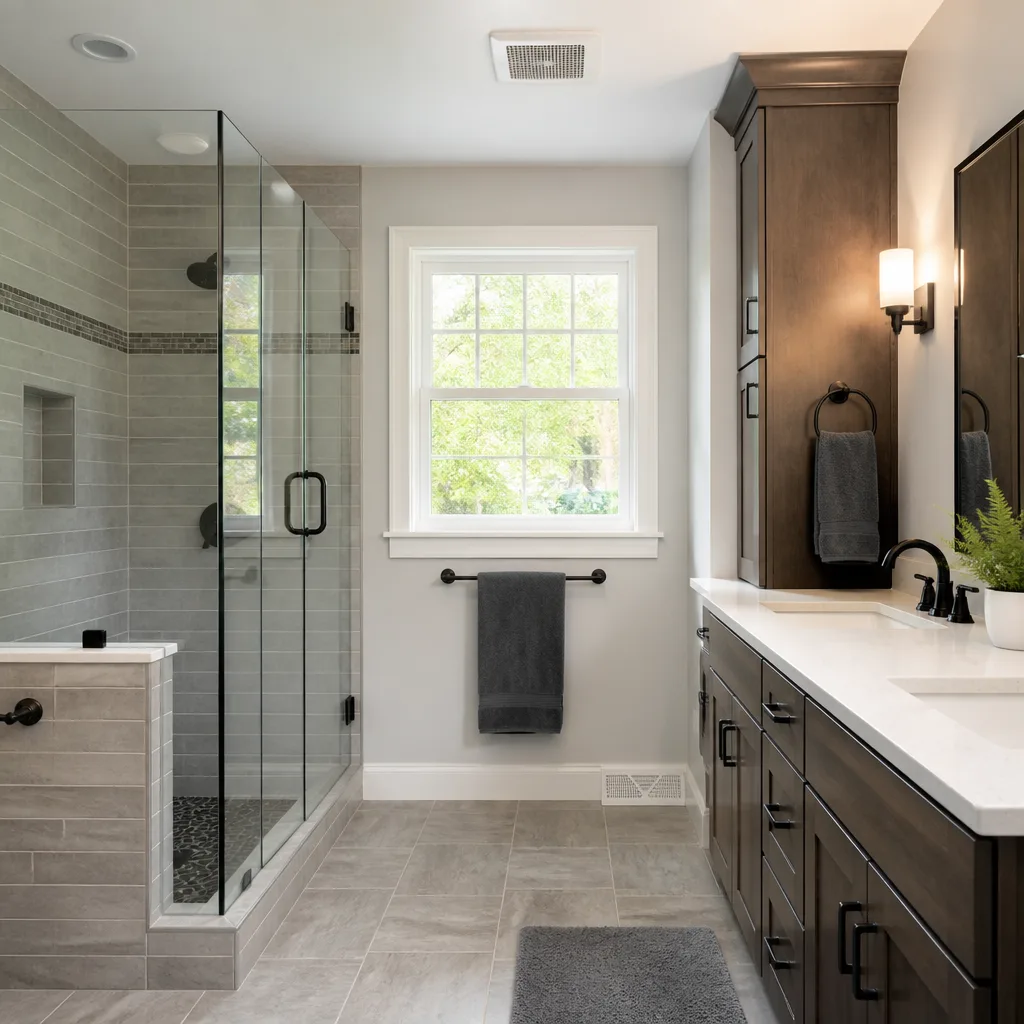


 Before
 After
After Before
 After
After Before
 After
AfterKitchen Remodeling Maintenance Checklist for Sunnyvale Homeowners
Here’s a number that stops most Sunnyvale homeowners mid-sentence: quartz countertops from Caesarstone and Silestone carry 10- to 15-year manufacturer warranties that are voided by a single cleaning product found in roughly 60% of the kitchens we walk into. The ingredient is printed right on the back label - isopropyl alcohol above 10% concentration - and it degrades the resin binders that hold engineered stone together. A remodeled kitchen in a Sunnyvale Eichler or a 1970s ranch can look pristine at year three and need $4,000 in countertop replacement at year eight, not because the materials failed, but because the maintenance schedule was treated as an afterthought. This guide specifies what to inspect, when, and by what measurable standard, using the materials and systems most commonly installed in homes built between 1960 and 2000 across Sunnyvale’s neighborhoods.
Quick Answer
A properly maintained kitchen remodel in Sunnyvale requires structured inspections at 30 days, 6 months, and annually thereafter, with specific checks for grout integrity, cabinet hardware torque, undermount sink silicone seals, and exhaust fan CFM performance. Annual maintenance spending of $200-$400 prevents premature replacement cycles costing $4,000-$9,000 over a 10-year window. The checklist below is organized by interval and material, with measurable pass-fail criteria for each item.
Table of Contents
- The 30-Day Inspection: Curing, Settling, and First Signs
- The 6-Month Check: Hardware, Seals, and Ventilation
- Annual Maintenance: Deep Inspection and Documentation
- Bay Area Humidity and Cabinet Box Integrity
- Warranty Documents: What to Keep and How to Store It
- Ventilation Clearance in Tight Sunnyvale Kitchen Footprints
- Cost-per-Year: Maintenance vs. Replacement Math
- Common Mistakes to Avoid
- When to Call a Professional
- Frequently Asked Questions
 Before
 After
AfterThe 30-Day Inspection: Curing, Settling, and First Signs
Thirty days after final walkthrough is the most overlooked interval in kitchen maintenance. Materials are still curing, fasteners are finding their set, and the small gaps or misalignments that become expensive problems are still easy to correct. We schedule this inspection as standard on every Kitchen Remodeling in Sunnyvale project we deliver, and we encourage homeowners to run the same checklist themselves.
Countertops: Curing and Seal Check
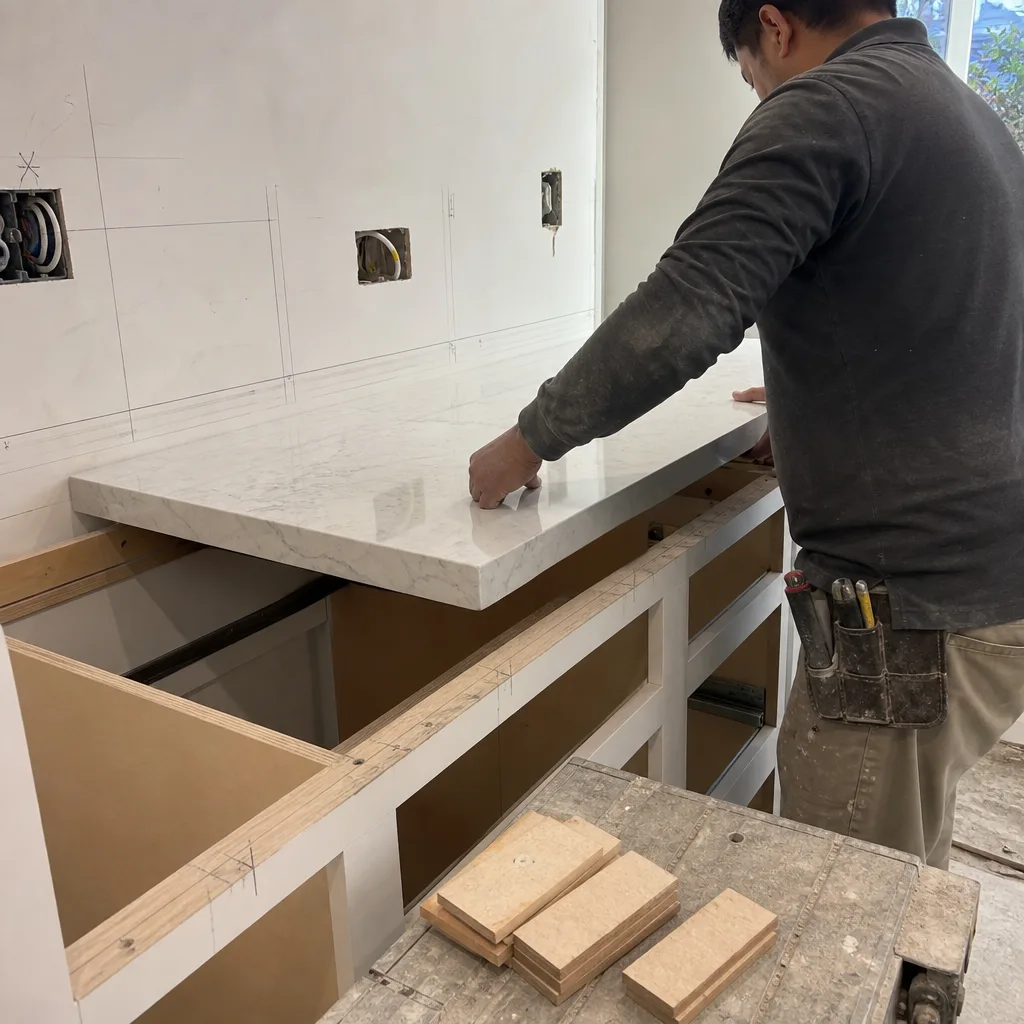
Natural stone countertops - granite, marble, soapstone - receive their initial penetrating sealer at installation. At day 30, perform the water droplet test: place a quarter-sized pool of water on the surface and time absorption. If the stone darkens in under 10 minutes, reseal immediately. For engineered quartz (Caesarstone, Silestone, Cambria), check for surface dulling or whitening at edges where cleaning products may have pooled. This is the interval where isopropyl alcohol damage first appears as a hazy film.
Pass-fail: Water beads for 10+ minutes on natural stone; quartz shows no edge whitening or dulling.
Grout and Caulk: Shrinkage and Coverage
Portland cement grout shrinks as it cures. Inspect all grout joints between backsplash tile and countertop, paying special attention to inside corners and the sink-to-countertop junction. Caulk, not grout, belongs in any plane change or movement joint - if your installer used grout in these locations, you’ll see hairline cracks by day 30. For silicone sealant at the sink rim and backsplash termination, verify continuous coverage with no voids or bubbles.
Pass-fail: No cracks wider than 1/16 inch in grout; silicone shows no voids or separation from either substrate.
Cabinet Adjustment: Door Alignment and Hardware Torque
Wood cabinet doors and drawer fronts adjust as indoor humidity stabilizes. Check all door gaps for parallelism - the reveal between double doors should be consistent top to bottom within 1/16 inch. Test soft-close hinges and drawer slides for full travel without binding. Tighten all visible screws with a screwdriver, not a drill, to avoid stripping. For Rowan Construction Group Sunnyvale home projects, we specify Blum or Grass hinge hardware with three-way adjustability; if your installer used fixed hinges, you may need shimming instead.
Pass-fail: All doors self-close or soft-close fully; drawer slides travel full length without resistance; no hardware looseness detectable by hand.
Plumbing: Leak Detection and Drain Flow
Run each faucet at full flow for 60 seconds, then check all accessible connections with a dry paper towel - P-trap joints, supply line terminations, and dishwasher drain hose connections. Test garbage disposal operation and listen for vibration or mounting looseness. In Sunnyvale’s older homes with galvanized supply lines still active in walls, pressure fluctuations during the first month can reveal weak joints that held during initial testing.
Pass-fail: Zero moisture on paper towel after 60-second flow test; disposal runs without cabinet vibration.
The 6-Month Check: Hardware, Seals, and Ventilation
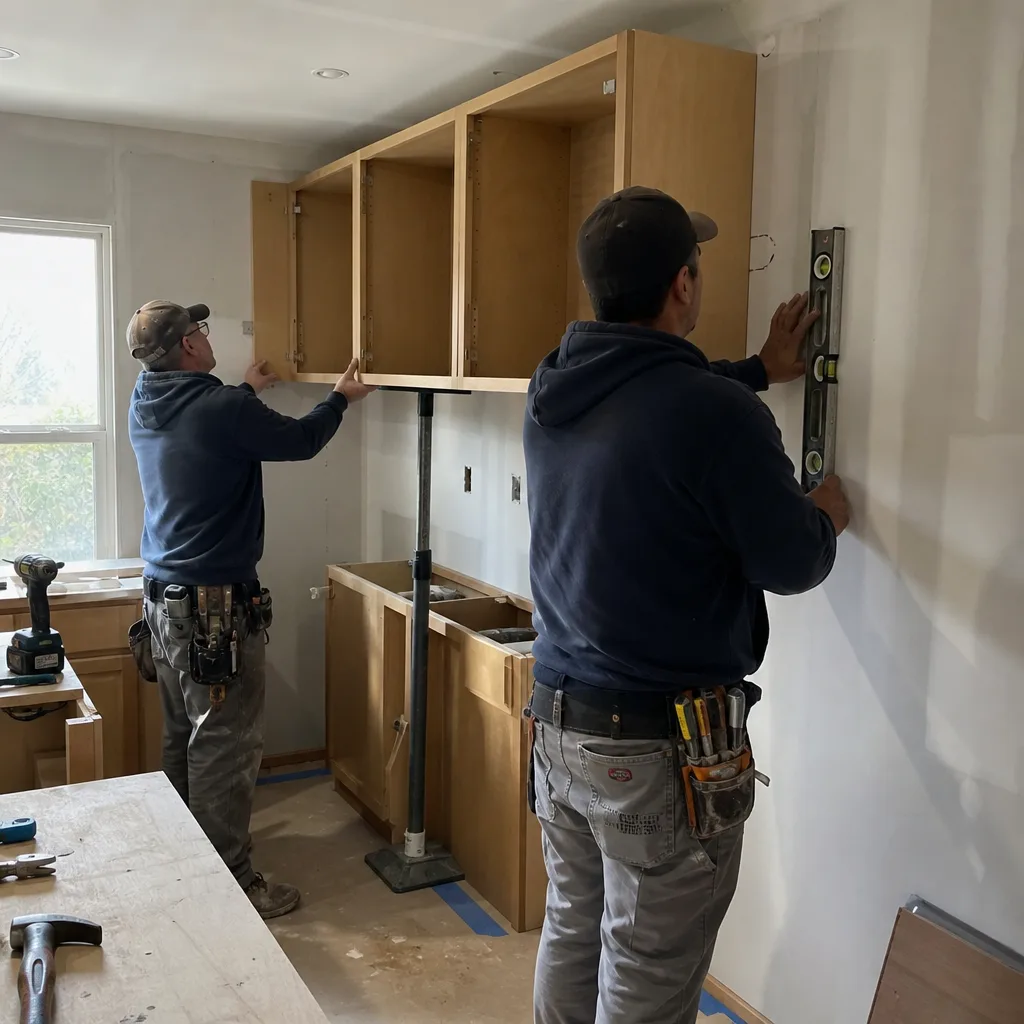
By month six, the kitchen has experienced a full seasonal cycle - the dry Santa Ana influence of late autumn and the moisture push from winter rains through spring. This is when Bay Area humidity effects first show in cabinet joinery, and when ventilation performance becomes measurable against real cooking loads.
Cabinet Hardware Torque and Function
Drawer pulls and door knobs loosen with thermal cycling and daily use. Check torque on all fasteners - a 6-inch cabinet pull should resist 10 pounds of pull force without rotation. Test drawer slide mounting screws; if a slide shifts in its pocket hole, the drawer will rack and the front gap will skew. For undermount drawer slides, verify that the locking tab or lever is fully engaged - a partially seated slide will fail catastrophically when loaded.
Pass-fail: All hardware resists hand-torque without movement; drawers load evenly to 25 pounds without racking.
Undermount Sink Silicone Seal Integrity
The silicone bead between an undermount sink and the countertop substrate is a structural joint, not just a water barrier. At six months, inspect from below the cabinet with a flashlight. Look for gaps, discoloration, or areas where the silicone has pulled away from either surface. In Sunnyvale kitchens with recirculating range hoods (common in homes under 1,400 square feet), steam and grease aerosols accelerate silicone degradation at this joint.
Pass-fail: Continuous silicone visible from below with no gaps exceeding 1/8 inch; no yellowing or hardening detectable by fingertip press.
Range Hood CFM Verification
Range hood performance is specified in cubic feet per minute (CFM) of air movement. At six months, verify that the hood still moves air at its rated capacity. The simple test: hold a single sheet of printer paper against the filter mesh at full speed. It should adhere firmly without slipping. If it falls, check for grease buildup on baffle filters, verify that the damper at the exterior termination opens fully, and confirm that ductwork joints haven’t separated. For recirculating hoods (charcoal filter type common in Sunnyvale condos and smaller homes), replace the charcoal filter regardless of apparent condition - six months is the manufacturer interval for active kitchens.
Pass-fail: Paper adheres to filter at full speed; recirculating filter replaced at 6-month mark.
Tile and Grout: Staining and Seal Condition
Apply the water droplet test to backsplash grout if your installer used a cementitious grout with sealer. For epoxy grout (Laticrete SpectraLOCK, Mapei Flexcolor CQ), check for surface film residue that traps cooking oils. In Sunnyvale’s hard water conditions - municipal supply averaging 180 ppm calcium carbonate - white haze on dark grout is typically mineral deposit, not grout failure. A 50/50 white vinegar and water solution dissolves it; if it doesn’t, the issue is deeper.
Pass-fail: Grout shows no staining that resists vinegar cleaning; no sand erosion or powdering when rubbed with a fingernail.
Annual Maintenance: Deep Inspection and Documentation
The annual inspection is where maintenance transitions from reactive correction to predictive preservation. We recommend scheduling this during Sunnyvale’s dry season - August through October - when humidity is lowest and any moisture-related issues are most visible.
Full Cabinet Box Inspection
Remove all contents from one base cabinet and one wall cabinet annually. Inspect the cabinet box interior for:
- Delamination at shelf pin holes or corner joints - the first sign is a white line at the edge of the melamine or plywood layer
- Screw withdrawal at hinge mounting plates, visible as ovalized holes or plate tilt
- Water staining at sink base cabinet floor, indicating slow drain or supply line seepage
- Shelf sag beyond 1/4 inch per 24-inch span under normal load
For frameless European-style cabinets (the majority of new installations), check that the confirmat screws or dowel joints at the cabinet back remain tight. Frameless construction transfers all load through the side panels; a loose joint here cascades into door misalignment and eventual hardware failure.
Pass-fail: No delamination visible; all joints tight; shelf deflection under normal load under 1/4 inch.
Countertop Structural Support
Overhangs beyond 12 inches require corbel or bracket support per standard practice. Check that support brackets remain tight to both cabinet frame and countertop substrate. For waterfall-edge islands, inspect the miter joint at the floor - this is where seasonal movement concentrates stress. In our experience across Kitchen Remodeling in Sunnyvale projects, islands with inadequate support show hairline cracks at this joint by year three if not caught early.
Pass-fail: All brackets resist hand pressure without movement; miter joints show no separation or filler extrusion.
Appliance Integration Points
Slide out the range or cooktop to inspect the electrical or gas connection condition. For gas, verify flex line coating integrity and test connections with soapy water solution - bubbles indicate leak. For electrical, confirm that the strain relief at the junction box is secure and that wire nuts show no heat discoloration. Check dishwasher mounting bracket engagement to countertop - a loose dishwasher rocks during cycles, stressing supply and drain hoses.
Pass-fail: No gas odor or bubble formation; no wire nut discoloration; dishwasher immobile when pushed.
Floor and Transition Integrity
Inspect all floor transitions - tile to hardwood, tile to vinyl, cabinet toe-kick to flooring. In Sunnyvale’s concrete slab construction (common in post-1960 subdivisions), seasonal slab movement creates stress at rigid transitions. Expansion joints in tile should show clean grout or caulk, not cracks propagating into the field tile. For floating LVP or laminate installations, verify that appliances on rollers haven’t pinned the floor - this blocks expansion and causes buckling.
Pass-fail: No cracks in field tile within 6 inches of transitions; floating floors show no buckling or end-lift at walls.
Bay Area Humidity and Cabinet Box Integrity
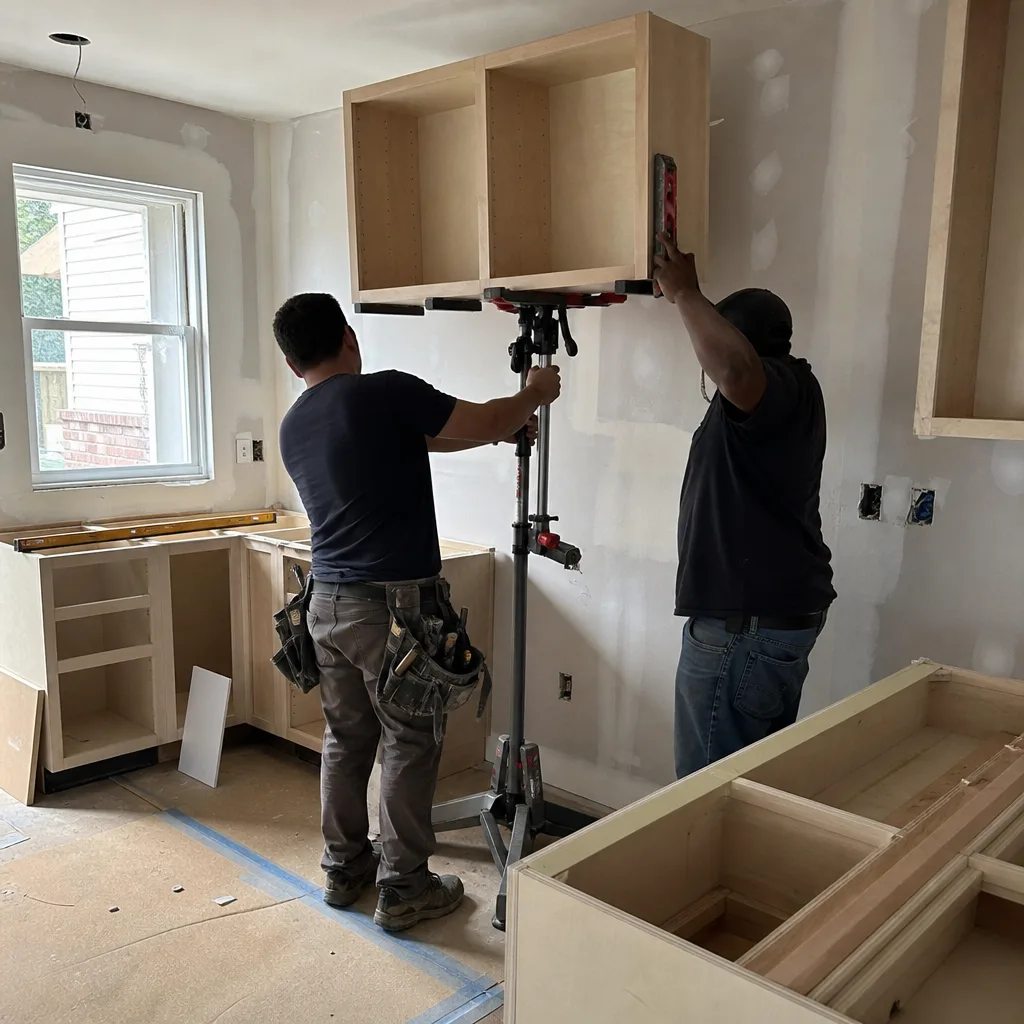
Sunnyvale’s climate presents a specific maintenance challenge that homeowners in drier inland markets don’t face. Winter humidity peaks at 75-85% relative humidity during January through March storm cycles, then drops to 40-50% by September. This 30-point annual swing cycles moisture into and out of wood components, stressing the adhesives and fasteners that hold cabinet boxes together.
The critical failure mode is delamination at the thermally fused laminate (TFL) edge of particleboard or MDF core cabinets - the construction used in KraftMaid, Wellborn, and most production cabinet lines. Moisture enters at exposed edges, the core swells, and the laminate face separates. The early sign is a white line at the edge that catches light differently than the surrounding surface. By the time the laminate lifts visibly, the core is compromised and the component needs replacement.
Prevention is straightforward and specific:
- Maintain indoor relative humidity between 40% and 60% year-round using a portable dehumidifier in winter if the home lacks central humidity control
- Never hang wet dish towels over cabinet doors - the localized moisture concentration at the edge exceeds what the TFL bond tolerates
- Repair any sink cabinet water intrusion within 48 hours; particleboard loses 70% of its structural integrity after 72 hours of saturation
- Apply edge banding adhesive (iron-on or contact cement type) at any chip or exposure point immediately, before moisture ingress begins
For solid wood or plywood cabinet boxes (typically semi-custom and custom lines), the concern is joint movement at mortise-and-tenon or dovetail corners. Check for gaps at drawer box corners annually; a gap that accepts a business card at any point indicates glue failure that will accelerate with humidity cycling.
In Sunnyvale’s older homes with original single-pane windows, condensation on kitchen glass during winter storms adds localized humidity that central systems don’t address. We see this pattern consistently in the Birdland neighborhood and along the older commercial corridors where 1950s and 1960s construction persists. A small dehumidifier rated for 300 square feet, run during storm events, eliminates this microclimate effect.
Warranty Documents: What to Keep and How to Store It
Manufacturer warranties on kitchen materials are enforceable contracts with specific validation requirements. The most common reason claims are denied is inadequate documentation - not product failure. Here’s what to maintain and how.
Countertop Warranties
Caesarstone: 10-year residential warranty covering manufacturing defects, not damage from impact, heat, or chemical exposure. Requires original receipt and installation documentation. The warranty is transferable once with proper notification.
Silestone: 15-year residential warranty with similar coverage exclusions. Requires registration within 30 days of installation - unregistered warranties are limited to 10 years.
Cambria: Lifetime residential warranty, the strongest in the category, but requires installation by a Cambria-certified fabricator. If your installer subcontracted fabrication, verify certification status.
Storage: Original paper receipt in a fireproof document box; digital photo backup of the receipt, warranty card, and installation invoice stored in cloud storage with date-stamped filenames.
Cabinet Warranties
KraftMaid: Limited lifetime warranty on cabinet box, 5 years on finish, 1 year on hardware. Requires proof of original purchase from authorized dealer - big-box store receipts are valid; third-party reseller receipts may not be.
Wellborn: Limited lifetime on box, 5 years on finish, with explicit exclusion for damage from “excessive moisture or dryness” - the humidity control issue noted above.
Storage: Cabinet warranty documents are typically included in the delivery packet. Scan all pages; the warranty terms reference specific care instructions that must be followed for coverage to apply.
Appliance Warranties
Major appliance warranties (refrigerator, range, dishwasher) are typically 1-year full coverage with extended component coverage on sealed systems. The critical document is the installation invoice showing date of installation, not date of purchase - warranty periods run from installation, and appliances can sit in warehouse for months.
Storage protocol we recommend: Create a dedicated folder in cloud storage named by project date (e.g., “Kitchen Remodel 2023-08”). Subfolders: Countertops, Cabinets, Appliances, Plumbing, Electrical. Store PDF scans of all invoices, photos of warranty cards, and dated photos of installation condition. Share access with your homeowner’s insurance agent - this documentation accelerates claims if damage occurs.
For Kitchen Remodeling in Sunnyvale projects we deliver, the documented photo record we provide at final walkthrough includes warranty-relevant images: unopened product labels, installation condition before and after, and model/serial number plates. This is included as standard, not an upgrade, under our documented photo record commitment.
Ventilation Clearance in Tight Sunnyvale Kitchen Footprints
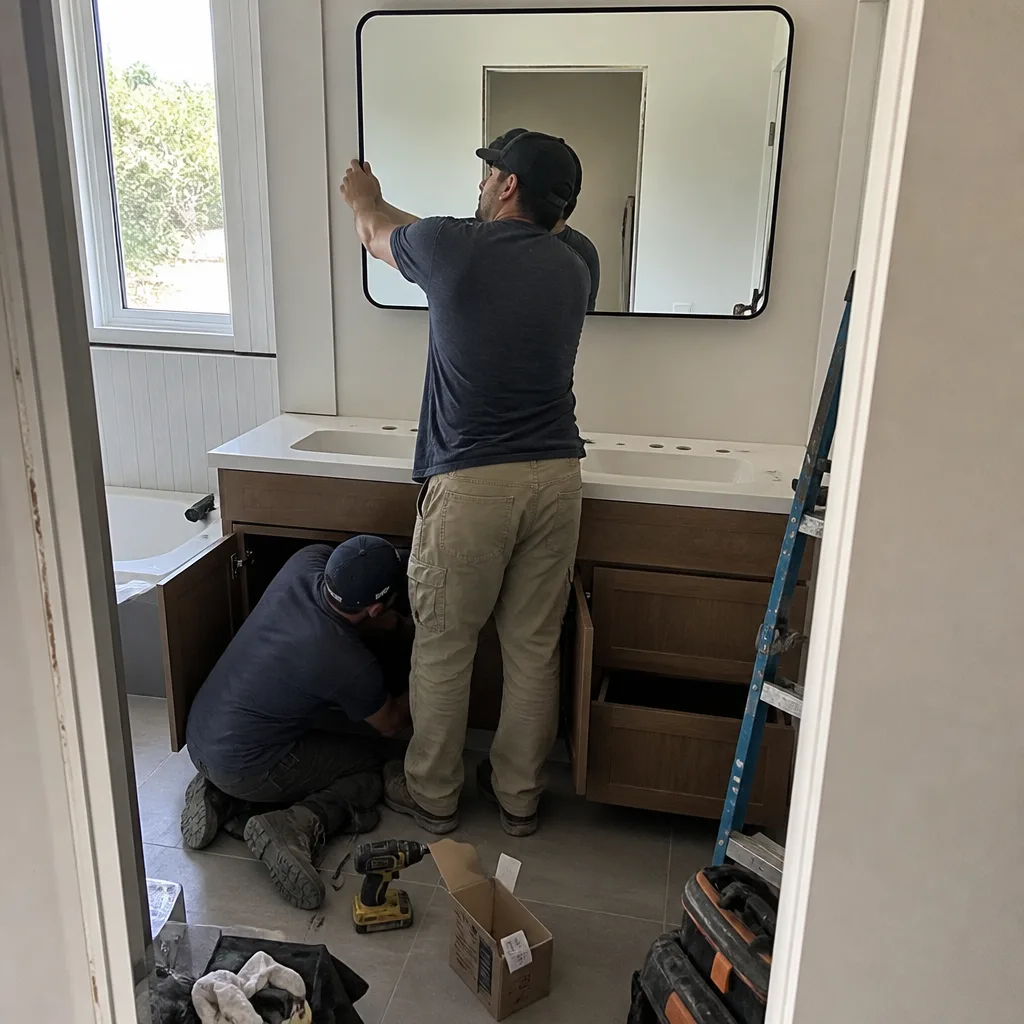
Sunnyvale’s housing stock includes a high proportion of compact kitchens - galley layouts under 80 square feet common in the 1960s and 1970s apartment conversions and smaller single-family homes. These spaces present specific ventilation challenges that affect maintenance requirements.
Recirculating vs. Ducted Range Hoods
Ducted range hoods exhausting to exterior are preferred for air quality and moisture control, but many Sunnyvale kitchens lack the wall or roof penetration path without major structural modification. Recirculating hoods with charcoal filters are the practical alternative, but they require more aggressive maintenance:
- Charcoal filters: Replace every 6 months under normal use, every 3 months for households cooking 5+ meals weekly with oil at high heat
- Grease filters (metal baffle or mesh): Clean monthly in dishwasher or with degreaser; grease buildup reduces airflow by 30% or more
- Cabinet surfaces near the cooktop: Wipe weekly with degreaser - recirculating hoods deposit aerosolized grease on adjacent surfaces that standard cleaners don’t remove
Microwave-Over-Range Combinations
These space-saving units are common in compact Sunnyvale kitchens but combine mediocre ventilation with difficult access for maintenance. The charcoal filter is typically hidden behind a vent grille requiring screwdriver removal - homeowners rarely do this. Annual inspection should include filter replacement and verification that the exhaust damper (if ducted to exterior) opens fully under fan operation. A stuck damper forces all air through recirculation path even when ducted, defeating the purpose.
Make-Up Air Requirements
California Title 24 requires make-up air provision for range hoods over 400 CFM in new construction and major alterations. If your Kitchen Remodeling in Sunnyvale project included a high-CFM hood, verify that the make-up air damper operates - typically a motorized damper interlocked with the hood fan. A failed damper creates negative pressure that backdrafts water heaters and fireplaces, and it overloads the hood motor. Test annually: with the hood on high, check that the damper blade opens within 10 seconds of fan activation.
Pass-fail: Hood moves rated CFM per paper test; charcoal filters replaced on schedule; make-up air damper operates if equipped.
Cost-per-Year: Maintenance vs. Replacement Math
The financial case for systematic kitchen maintenance is straightforward when the numbers are written out. Here’s the replacement cost schedule we see for unmaintained kitchens in Sunnyvale, versus the maintenance investment that prevents it.
| Component | Premature Replacement Cost | Typical Failure Year (Unmaintained) | Annual Maintenance Cost | Prevention Mechanism |
|---|---|---|---|---|
| Quartz countertop (resin degradation) | $3,500-$6,500 | Year 7-9 | $40 (correct cleaner) | Avoid isopropyl alcohol cleaners |
| Cabinet box delamination (sink base) | $800-$1,400 | Year 5-8 | $0 (behavioral) | Don’t hang wet towels on doors; control humidity |
| Grout failure, backsplash | $600-$1,200 | Year 4-6 | $25 (sealer) | Annual water test; reseal when absorption under 10 min |
| Undermount sink separation | $1,200-$2,500 | Year 6-10 | $0 (inspection) | 6-month silicone check from below |
| Range hood motor failure | $400-$900 | Year 5-7 | $60 (filters) | Replace charcoal filters; clean grease filters |
| Drawer slide/hardware failure | $200-$400 | Year 3-5 | $0 (torque check) | 6-month hardware torque verification |
| Appliance premature failure (ventilation-related) | $1,500-$3,500 | Year 6-9 | $50 (clearance check) | Annual clearance and damper verification |
The unmaintained kitchen incurs $8,000-$16,000 in premature replacement costs spread across years 3-10. The maintained kitchen incurs $175-$375 annually, or $1,750-$3,750 over the same decade. The net prevention value is $4,250-$12,250, even before accounting for the disruption of replacement work and the mismatch risk of discontinued materials.
These are the numbers we put in writing before any work starts on a Kitchen Remodeling in Sunnyvale project - not to sell maintenance as an add-on, but because the total cost of ownership matters to the homeowners we work with. Under Clause 1 of the Haven Standard, the price is written before anyone starts, and that price includes the documented photo record that becomes part of your maintenance documentation.
Common Mistakes to Avoid
- Using vinegar on natural stone monthly. Acetic acid etches calcium-based stone (marble, limestone, travertine) with each application. The damage is cumulative and irreversible. Use pH-neutral stone cleaner instead - the $8 bottle prevents $3,000 in refinishing.
- Ignoring the cabinet under the sink. This is the highest-moisture environment in the kitchen, yet it’s the least inspected. A slow drain leak or supply line seepage destroys particleboard in 72 hours. Check monthly with a flashlight; place a moisture alarm ($15) on the cabinet floor.
- Running the dishwasher with a loose mounting bracket. The bracket secures the dishwasher to the countertop or cabinet frame; without it, the unit rocks during drain cycles, stressing hoses and eventually cracking the countertop at the sink cutout. Tighten annually.
- Using Magic Eraser on matte cabinet finishes. Melamine foam is micro-abrasive. On matte or textured finishes, it creates polished patches that catch light differently and cannot be reversed. Warm water and mild dish soap only.
- Neglecting the range hood because “it still runs.” A hood moving 30% of rated CFM due to grease buildup provides false confidence - you hear the motor, assume ventilation is occurring, while moisture and combustion byproducts accumulate. Test with the paper method quarterly.
- Storing warranty documents in the kitchen junk drawer. Heat and humidity accelerate paper degradation; kitchen drawers are the worst storage location. Scan everything and store digitally; keep originals in a fireproof box elsewhere in the home.
- Assuming new construction methods eliminated maintenance needs. Modern materials are more consistent but not maintenance-free. Engineered quartz still degrades with wrong cleaners; soft-close hinges still loosen; silicone still ages. The inspection intervals change, not the need for inspection.
When to Call a Professional
Some maintenance boundaries are clear: gas line work requires a licensed plumber, electrical panel work requires a licensed electrician, and structural modifications require engineering review. But the transition from homeowner maintenance to professional intervention is often gray. Call a professional when you encounter any of the following:
- Water staining that reappears within 48 hours of cleaning - indicates active leak, not surface moisture
- Cabinet delamination extending more than 2 inches from an edge - beyond repair with edge banding
- Countertop cracks, chips, or separations that penetrate the full material thickness
- Range hood motor noise change (grinding, squealing, or rattling) - bearing failure imminent
- Any gas odor, even faint, at appliance connections - evacuate and call from outside
- Tile cracks that propagate across multiple tiles or follow a linear pattern - indicates substrate movement, not isolated impact
Rowan Construction Group Sunnyvale offers free estimates in Sunnyvale - call (650) 405-3637. We provide a written price before any work starts, every time, and we’ll review any competitor’s written estimate line by line at no charge through our Free Second Opinion program. Our 365-Day Done Right Promise means if it’s not done right, we make it right - backed by The Haven Standard, not a handshake.
Frequently Asked Questions
Annual kitchen maintenance for a typical remodeled kitchen in Sunnyvale runs $200-$400 in materials and supplies, assuming homeowner-performed labor. Professional maintenance services, if preferred, add $300-$500 for an annual visit. This investment prevents $4,000-$9,000 in premature replacement costs over a 10-year ownership period. Call (650) 405-3637 for an exact quote on professional maintenance - estimates are free.
No. Under Clause 1 of the Haven Standard, the price is written before anyone starts. No change proceeds without a signed change order. This discipline is why Rowan’s projects finish within a few percent of the agreed cost across 4,000-plus jobs since 2007. The quote you receive is a flat price with a written scope and written warranty.
Perform the paper test: hold a single sheet of printer paper against the filter mesh at full fan speed. If it adheres firmly, airflow is adequate. If it slips or falls, check for grease-clogged filters, a stuck exterior damper, or separated ductwork. For recirculating hoods common in compact Sunnyvale kitchens, replace charcoal filters every 6 months regardless of apparent condition.
Caesarstone, Silestone, and Cambria all exclude coverage for damage from cleaners containing isopropyl alcohol above 10%, bleach above 5%, or pH outside the 5-9 range. The specific ingredient to check is isopropyl alcohol - present in many “disinfecting” wipes and sprays marketed for kitchen use. Use pH-neutral quartz cleaner or mild dish soap and water instead.
If your home lacks central humidity control and you observe condensation on windows during winter storms, yes - a portable dehumidifier rated for 300 square feet, run during storm events, prevents the localized humidity that causes cabinet edge delamination. This is particularly relevant in older Sunnyvale homes with single-pane windows, common in the Birdland area and 1960s subdivisions. The alternative is repairing or replacing cabinet boxes at $800-$1,400 per unit.
A properly maintained kitchen using mid-grade materials (KraftMaid or equivalent cabinets, quartz countertops, quality hardware) should require only minor maintenance for 10-15 years, with major component replacement at 15-20 years. Unmaintained kitchens show component failure at 5-8 years. The difference is the maintenance schedule, not the material quality. Call (650) 405-3637 to schedule your free estimate for any repair needs.
The Bottom Line
A kitchen remodel is a significant investment - in Sunnyvale’s market, typically $45,000-$85,000 for a full renovation. That investment depreciates faster than necessary when maintenance is reactive rather than scheduled. The checklist above provides specific intervals, measurable pass-fail criteria, and cost documentation to prevent the $4,000-$9,000 in premature replacement that unmaintained kitchens incur. The key disciplines are simple: inspect at 30 days, 6 months, and annually; control humidity; use correct cleaners; and maintain warranty documentation. For homeowners who prefer professional support, Rowan Construction Group Sunnyvale delivers the same documented discipline on maintenance calls that we apply to full remodels - written price before work starts, background-checked uniformed technicians, and a photo record of every visit.
Written by Grant Rowan, Owner at Rowan Construction Group Sunnyvale, serving Sunnyvale since 2007.